Minrora logo

Filters

The Missing 95%: Why Everything We See Is Just the Tip of the Iceberg?

The Missing 95%: Why Everything We See Is Just the Tip of the Iceberg?

Welcome to the Kingdom of the Invisible, where the universe doesn't leave fingerprints—its fingerprints point toward something we can't see.

Today we're tackling a number that sounds like a myth, but it's real: in the cosmos, what we see with telescopes—the bright stuff that forms stars and galaxies—would be only a tiny fraction. The majority of the universe's content is thought to be dark matter and dark energy, together around 95%. The unsettling part: they're not dark shadows like in a movie; we feel them through their effects, but not through their light.

Picture entering a massive theater with the curtains closed. The actors (visible stars and galaxies) put on the show on the stage. But the entire stage is huge, and there are invisible forces: cables, platforms, and wheels that hold everything in place. That stage is dark matter. And the backstage rigging, the one nobody sees but that moves the scenery, is dark energy.

Now, concrete cases: galaxies spin like whirlpools of sauce in a pot… except that if you count what you can see, there's not enough matter to explain that much motion. There must be extra mass—something that pulls with gravity—but doesn't glow: dark matter.

And the second mystery hits at the end of the performance: the universe, instead of slowing down its expansion like a ball losing speed, seems to be accelerating. It's as if the show has an invisible hand pushing the curtain forward—faster and faster. That hand would be dark energy.

So here's the burning question: if 95% of the universe is invisible, how do we know it's there—and what story is it telling about the full theater of reality?

Read more
El Reino de lo Invisible
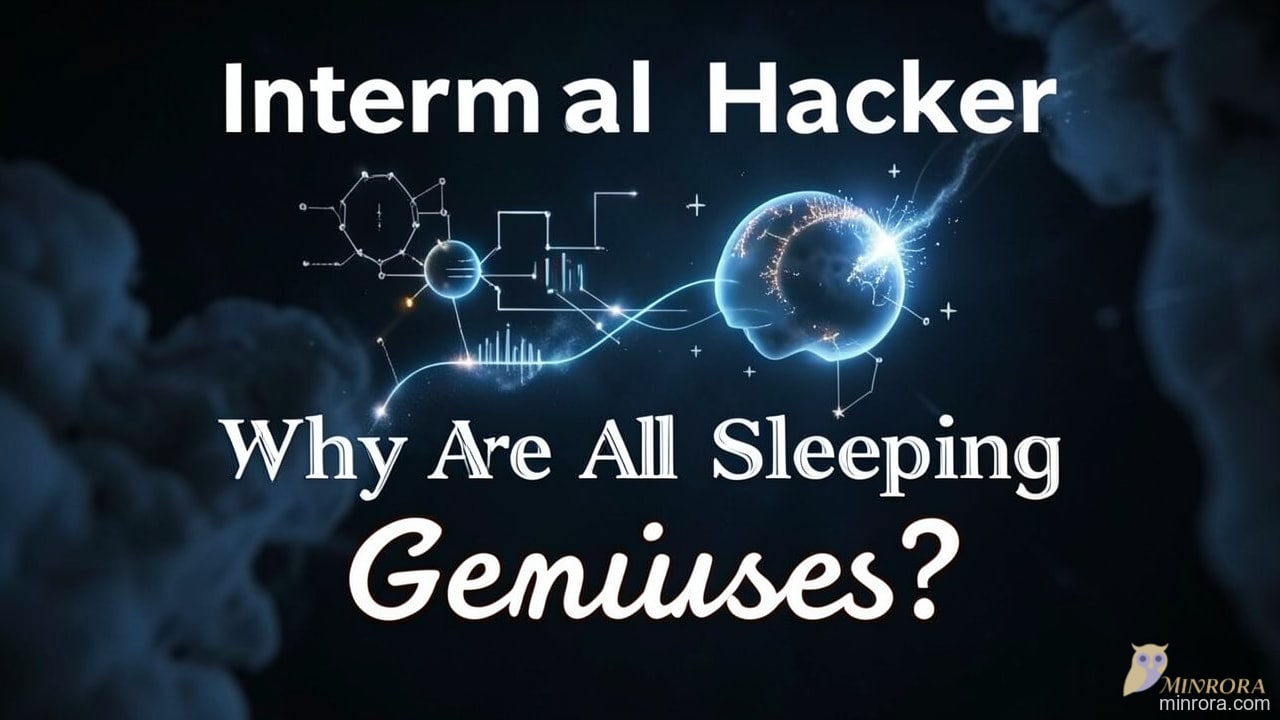
The Internal Hacker: Why Are We All Sleeping Geniuses?

The Internal Hacker: Why Are We All Sleeping Geniuses?

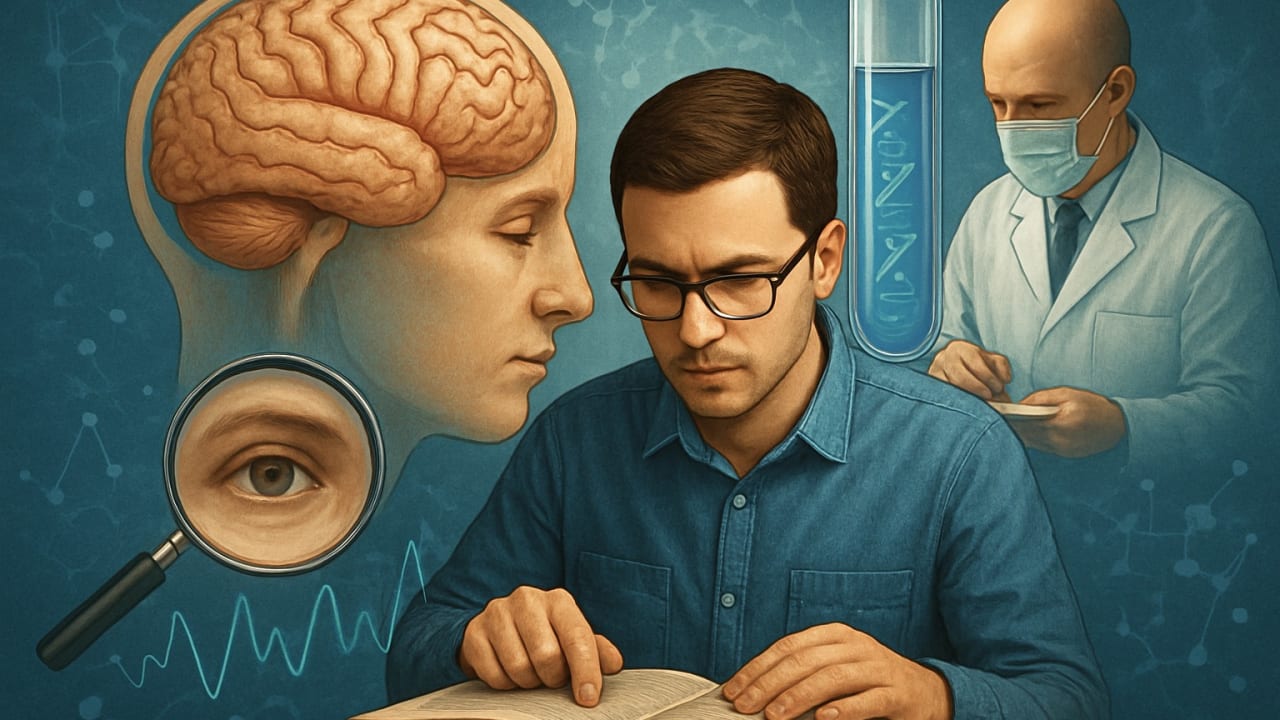
Welcome to the first installment of 'Savants.' Imagine for a moment that your brain is an ultra-powerful computer. Normally, that computer has a standard operating system installed that allows you to do everyday things: talk, recognize faces, decide what to eat. But what would happen if a 'glitch' in that operating system accidentally unlocked a hidden folder with almost superhuman processing power? That is, in broad terms, Savant Syndrome.

The term 'savant' comes from French and means 'learned' or 'wise.' However, it is not traditional wisdom that defines these individuals. We are not talking about someone who simply got good grades in school. We are talking about what scientists call an 'island of ability.' Imagine an ocean of cognitive difficulties, where the person might not be able to add two plus two or understand a metaphor, but in the middle of that ocean, an island of absolute genius emerges, so bright it seems like pure magic. These people possess extraordinary skills that contrast drastically with their limitations in other areas.

The most emblematic case is that of Kim Peek, the man who inspired the movie 'Rain Man.' Kim was what is known as a 'mega-savant.' His memory was literally photographic. It is estimated that he memorized more than 12,000 books throughout his life. But the most incredible thing was not just the quantity, but the way he did it: he could read two pages at the same time, one with his left eye and another with his right, taking just eight seconds to scan both. Once the information entered his brain, it stayed there forever, with 98% accuracy.

However, despite being a living human library, Kim could not perform basic tasks like buttoning his shirt or brushing his teeth without help. His brain was capable of storing the map of every city in the United States, but he struggled to understand the concept of a joke. This paradox leads us to a haunting question: if Kim had that 'superpower' hidden in his mind, does it mean that this capacity also resides, in some way, within all of us? Is it possible that we all have a sleeping genius waiting to be awakened by a system error?

Read more
Savants
The Legacy of Dynamite: Why Did Alfred Nobel Create the Prize?

The Legacy of Dynamite: Why Did Alfred Nobel Create the Prize?

Paris, 1888. Alfred Nobel opens a newspaper and finds an impossible scene: his own death. It was not a metaphor. It was not a joke. It was a journalistic mistake. His brother Ludvig had died, but a French paper believed Alfred was the one who had passed away and published a brutal obituary: 'The merchant of death is dead.'

Imagine reading, while still alive, the cruelest summary of your existence. Not 'brilliant inventor.' Not 'visionary businessman.' Not 'man of science.' But someone who had become rich by selling a more efficient way to kill. Nobel, who had spent years among tubes, powder, explosions, and formulas, suddenly saw how he might be remembered forever.

And the most uncomfortable part was that the accusation contained some truth.

Alfred Nobel was born in Stockholm in 1833, into a family where business and explosives were part of daily life. His father, Immanuel Nobel, was an engineer and inventor. Alfred grew up among workshops, debt, relocation, and dangerous experiments. He was an unusual industrialist: he wrote poetry, read in several languages, preferred the lab to elegant salons, and carried a quiet loneliness. But he also had an obsession: taming an unpredictable substance called nitroglycerin.

Nitroglycerin was like a wild animal trapped in a bottle. It had enormous power, but it could explode from a blow, a temperature change, or a small mistake. In 1864, that threat became tragedy. An explosion at the family factory in Heleneborg, Sweden, killed several people, including Alfred's younger brother Emil Nobel. This was not distant news. It was his own world collapsing into rubble.

And yet Nobel did not stop. He kept searching for a way to make that monster useful and controllable. He finally found an answer by mixing nitroglycerin with a porous earth called kieselguhr. The result was dynamite, patented in 1867: more stable, easier to transport, more practical. For mining, tunnels, railways, and canals, it was revolutionary. It was like going from breaking a wall with a spoon to using a precise tool.

  • Dynamite helped carve roads, bridges, and mountains.
  • It also made destruction faster and easier.
  • And it made Alfred Nobel an immensely rich man.

So here is the question that ignites this episode: if his fortune came from an invention that could build and kill, was it guilt, clarity, or both that led Nobel to leave his money to reward those who brought 'the greatest benefit to humankind'?

Read more
Arquitectos de la Vida: La Saga de los Premios Nobel