Minrora logo

Filters

Prosopagnosia: The horror of not recognizing your own mother

Prosopagnosia: The horror of not recognizing your own mother

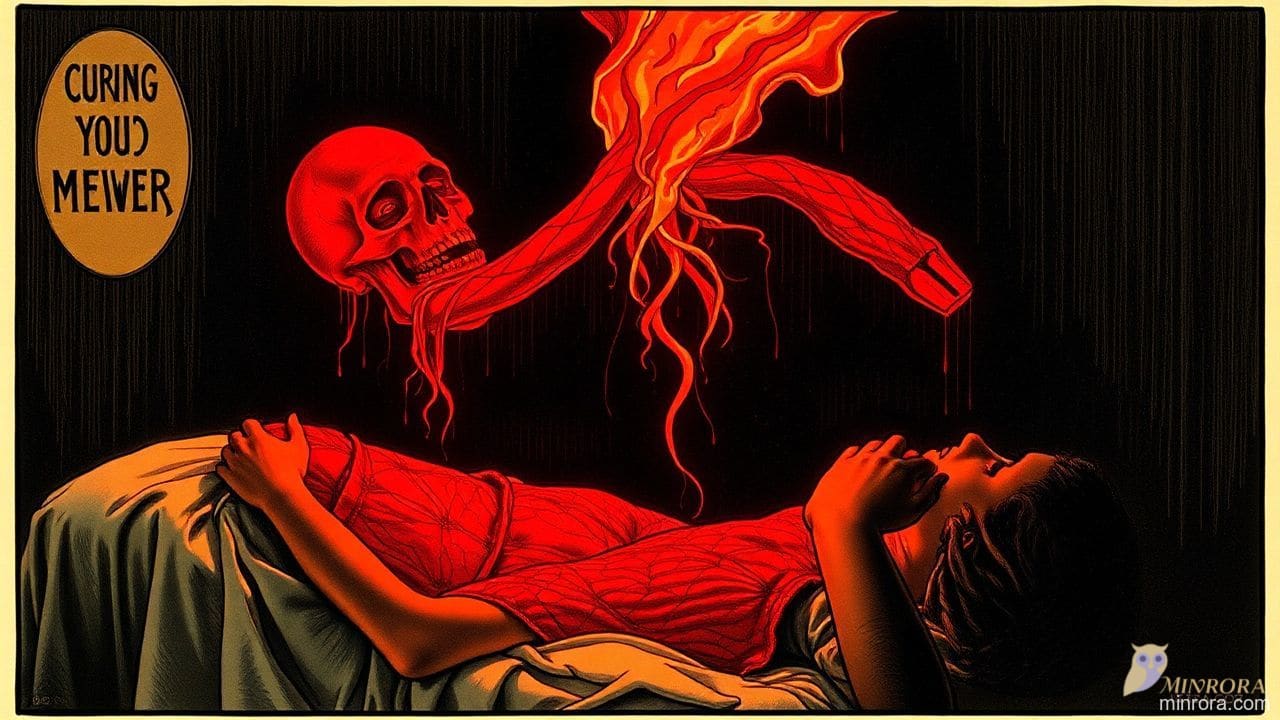
Imagine a world where faces, those visual fingerprints of identity, become blurs. A fog that dissipates just as you try to grasp it. This isn't science fiction; it's a cruel reality for those living with prosopagnosia.

Think about it for a moment. You wake up one morning, light filtering through the window. You head downstairs to the kitchen, the aroma of coffee guiding you. You see someone standing there, their back to you. They turn around. It's a woman. Her voice is familiar. Her gestures, her habits, everything screams 'mother'. But when your eyes try to fit together the pieces of her face – the curve of her nose, the color of her eyes, the line of her smile – the puzzle disintegrates. It's not that you don't see her. You see her. Every feature is there, crisp, perfectly lit. But your brain, that master builder of meaning, refuses to connect those features with the person you love, who has known you since day one.

It's the horror of the familiar turned strange. A short circuit in the most intimate software of our identity. Famous neurologists like Oliver Sacks narrated how one of his patients greeted his wife as if she were a hat, or confused his own foot with a pet. Extreme cases, yes. But prosopagnosia is often more subtle and more heartbreaking. It's seeing your partner in the supermarket and walking past them, assuming they're a stranger. It's your child talking to you and, for an instant, your mind wondering 'who is this child?'

It's not a memory problem; it's not that you've forgotten who they are. Nor is it a vision problem; you can describe every detail of the face, but those details don't evoke 'recognition'. Your brain can distinguish a chair from a table, a dog from a cat, and a face from any other object. But when it comes to assigning a specific identity to that face, the connection breaks. It's like having a huge photo archive in your head, but the search system for faces is broken.

How can our brain, so incredibly sophisticated, fail at something as fundamental as recognizing the person who gave us life? What complex circuits short-circuit so that the most beloved face becomes that of a stranger?

Read more
La Paradoja de los Espejos: El Mapa de lo Invisible
Administrator Mode: The Total Metacognition Savant

Administrator Mode: The Total Metacognition Savant

Hello everyone and welcome back to 'Savants', where we unravel the mysteries of extraordinary minds! We've talked about musical savants, mathematical savants, artistic savants, people who can recall every detail of their lives, or those who build complex architectural models in their minds. But today, I want us to go one step further, to something that, while theoretical, clues suggest could be the pinnacle of cognitive self-mastery: the total metacognition savant.

Imagine for a moment that your brain is an incredibly powerful computer. Most of us use this computer to browse the internet, write documents, or play games, but we only have access to the 'user interface'. We don't see the source code, we can't adjust internal processes in real-time, nor optimize system performance at will. Now, think of a total metacognition savant as someone who not only has access to the 'user interface', but also to the 'administrator mode'.

What is metacognition? In simple terms, it's thinking about how we think. It's the ability to be aware of our own mental processes: how we learn, how we remember, how we solve problems, how we feel. It's knowing when we understand something and when we don't, and what strategy to use to improve that understanding. Most of us have a basic level of this. For example, when you realize you're daydreaming and tell yourself 'Get back to work!', that's metacognition.

Now, imagine someone who has this ability taken to the absolute extreme. A total metacognition savant would be a person with a granular, real-time understanding of each of their cognitive processes. It would be like having an internal screen constantly displaying the state of their memory, attention, emotions, biases, and learning strategies. They wouldn't just be aware they are daydreaming, but they would know exactly why, which neural networks are involved, what stimuli distracted them, and how to reprogram their attention to maximize concentration.

While we don't have a documented case of a 'total metacognition savant' in the classic sense, modern science gives us clues that this is more than a fantasy. People who practice deep meditation for decades, users of certain psychedelic compounds under supervision, or even some individuals with certain neurological conditions, have reported glimpses of this super-awareness. Fleeting moments where the 'self' dissolves and one can observe the flow of one's own mind as if an external, impartial, and fully informed observer.

So, if these glimpses are possible, what would neuroscience say about the possibility of a brain being able to operate sustainably in this 'administrator mode', with total control and understanding of itself? What brain mechanisms underlie this elusive and fascinating ability?

Read more
Savants
Willem Einthoven: The Heart's Electrical Language (The ECG) (1924)

Willem Einthoven: The Heart's Electrical Language (The ECG) (1924)

Imagine for a moment that you are a doctor in the early 20th century. A patient arrives at your office with an irregularly beating heart, a constant feeling of exhaustion, and palpable fear in their eyes. With your stethoscope, you can hear that erratic rhythm. You can feel a weak pulse. But what is truly happening inside that vital organ? Why is it beating this way? Is it a muscular problem, a nerve issue, or perhaps something deeper?

Doctors back then were blind. They could hear, they could feel, but they couldn't see the heart's electrical engine. It was like trying to understand a complex engine just by listening to its noise, without being able to open the hood.

This is where our protagonist today enters the scene: Willem Einthoven. A man with a brilliant mind, infinite patience, and a singular obsession: to unravel the heart's secret electrical language. Einthoven wasn't satisfied with murmurs and pulses. He wanted to record the heart, to see its electrical pattern as if it were a musical score, to read its story in lines and peaks.

By the late 19th century, it was already known that the heart generated electricity. Other scientists had made rudimentary attempts to measure it, but their devices were huge, imprecise, and slow. Their recordings were more like blurry scribbles than a true map of cardiac activity.

Imagine having a serious problem and your doctor can only offer you a guess. Einthoven knew this. He knew that the key to diagnosing, and perhaps saving, countless lives was hidden in those tiny electrical signals the heart emitted with each beat. But how could something so weak and fleeting be captured with the technology of the time? How could those invisible internal sparks be converted into a legible graph that doctors could understand?

Read more
Arquitectos de la Vida: La Saga de los Premios Nobel
The Rubber Hand Experiment: Stealing your body

The Rubber Hand Experiment: Stealing your body

In the labyrinth of the mind, our perception of the body is the most intimate map we possess. We believe we are absolute owners of every inch of skin, every muscle, every pulse. It's a conviction so deeply ingrained that we barely question it. But what if I told you that your brain, the silent architect of your reality, can be persuaded that a part of your body doesn't belong to you? Or even that a piece of plastic or silicone is, suddenly, an extension of your own flesh?

Imagine a dimly lit room, like the setting for a clandestine experiment. You're seated, one hand hidden under a cloth. Beside you, on the table, an identical rubber hand rests in plain sight. A researcher, with calculated movements, begins to simultaneously stroke your real hand, the one you don't see, and the rubber hand, the one you do see. The rhythm is constant, the touches identical. At first, it's just a game of mirrors, a strange choreography.

But little by little, something begins to fracture in the logic of your perception. The tactile sensations your brain registers from the hidden hand synchronize with the visual image of the rubber hand being touched. It's a dissonance that the brain doesn't tolerate. Like a film editor seeking coherence, your mind tries to connect the dots, looking for a narrative that makes sense. And the solution it finds is astonishing, almost terrifying: the rubber hand begins to feel like your own. Your brain, in an act of sensory sleight of hand, incorporates it into your body schema.

The confirmation comes with an unexpected blow. The researcher suddenly strikes the rubber hand with a toy hammer, or threatens it with a scalpel. And what happens? A wave of anguish, a visceral startle, a muscular contraction. Your heart races as if the threat were real, as if the impact were about to shatter your own bones. You feel the pain, the vulnerability, despite knowing, consciously, that it's just a piece of plastic. You have been witnesses and victims of a subtle theft: your brain has rewritten the ownership of your body.

This is the famous Rubber Hand Experiment, a fascinating window into the malleability of our physical identity. It's not magic, it's not hypnosis. It's science. But how on earth does our brain achieve such a feat? What internal mechanisms are so susceptible to illusion, so willing to abandon truth for a convincing narrative?

Read more
La Paradoja de los Espejos: El Mapa de lo Invisible
The Oracle of Physics: Probability Calculators

The Oracle of Physics: Probability Calculators

Welcome back, mind explorers, to 'Savants'! In previous episodes, we've discovered how some people with savant syndrome can be masters of music, art, memory, or numbers. But today, we're going to delve into an even more enigmatic territory: savants who seem to have an intuitive and profound connection with the laws governing our physical universe, especially in the field of probabilities.

Imagine for a moment someone who has never studied physics or statistics at university, who perhaps even struggles with the most basic daily tasks, but who can 'feel' or 'see' the hidden patterns that dictate outcomes. Consider the case of Michael, a young man with autism. Michael is not a theoretical physicist, but if presented with a complex problem about the trajectory of several moving objects or the probabilities of a random event, he could often give an astonishingly accurate answer. He didn't use formulas; he didn't make visible calculations. He just 'knew it.'

Another fascinating example is that of savants who excel in games of chance (not by luck, but by a deep understanding of trends and probabilities), or those who can predict with unusual accuracy the outcome of complex sporting events, considering many variables simultaneously. It's as if their brain is a silent supercomputer, processing data that most of us don't even perceive. This isn't about magic or supernatural powers, but an extreme form of brain processing. It's as if the universe spoke a hidden language of numbers and patterns, and these savants were born bilingual.

The big question that arises is: how is it possible for a human brain, without formal education, to decode the intricate rules of probability and physics, and make predictions that defy common logic? What neurological mechanisms underlie this astonishing ability to be an 'oracle of physics'?

Read more
Savants
Banting and Macleod: Insulin and the Miracle of Recovered Life (1923)

Banting and Macleod: Insulin and the Miracle of Recovered Life (1923)

Imagine a world where the cruelest disease didn't strike in old age, but stole childhood itself. A world where, if your child started losing weight for no reason, drinking water incessantly, and urinating constantly, you knew it was the beginning of the end. There was no cure, no hope. Childhood diabetes was, in essence, a swift and heartbreaking death sentence.

In the early 20th century, this was the grim reality for thousands of families. To watch a child, full of life one day, languish the next, wasting away until their small body could no longer cope. Doctors called it 'diabetes mellitus' and its prognosis was invariably fatal. The only 'solution' was a strict, near-starvation diet, which merely prolonged the suffering for a few weeks or months, until exhaustion and acidosis eventually claimed the patient.

Think of Leonard Thompson. He was 14 years old in 1922 and was dying in a Toronto hospital. His body weighed barely 64 pounds, his skin was dry and scaly, his eyes sunken. He was in a diabetic coma, on the brink of the abyss. His desperate parents had exhausted all options, and doctors could only offer resignation.

This was not an isolated case; it was the norm. A death sentence that knew no social class or country, and that struck especially hard at the youngest. Hospitals were full of children like Leonard, awaiting the inevitable end.

But what if I told you that, amidst that darkness, a pair of scientists, almost blindly, were about to unearth the key to life? How did Frederick Banting and John Macleod, with the help of a student and a biochemist, manage to reverse what seemed an inescapable condemnation and offer humanity a second chance?

Read more
Arquitectos de la Vida: La Saga de los Premios Nobel
Pareidolia: Why You See Ghosts in the Shadows

Pareidolia: Why You See Ghosts in the Shadows

Welcome back to 'The Paradox of Mirrors', the journey where we unravel the most fascinating tricks of our own minds. Today, we delve into the realm of shadows and whispers, where the invisible takes shape and the random becomes a message.

Imagine this: You're alone at home, the night is deep. A jacket hung on a chair transforms, under the ghostly moonlight, into a human figure. Damp stains on the wall seem to draw a familiar face. In the bark of a tree, you'd swear you see the profile of an old man. Or, how about that classic: seeing the Man in the Moon?

This isn't magic, nor a trick of your eyes. It's your brain, the conductor of your personal reality orchestra, working overtime. It's a phenomenon that mind explorers call Pareidolia: the irresistible tendency to find significant patterns, especially faces and recognizable forms, in random and non-specific stimuli. It's seeing a dragon in the clouds, a religious figure in burnt toast, or even hearing hidden messages when playing music backward.

I recall a story from a coastal village. For centuries, its fishermen swore they saw a phantom lighthouse in the densest fog, a flickering light guiding them home. It wasn't a real lighthouse, of course. It was the brain, desperate to find meaning, to draw a line in the chaos of the mist and fragmented starlight. Their minds projected a solution, a hope, onto the blank screen of the haze.

Think of the famous 'face' on Mars, a geological formation that, from certain angles and with the right lighting, resembles a gigantic sculpture of a human face. Thousands interpreted it as proof of alien civilizations. Science showed us it was just a mountain and shadows, but the image was etched into the collective imagination. Why are our brains so eager to turn ambiguity into something familiar, into something we can name and, sometimes, even fear?

Is this peculiarity of our perception a simple optical illusion, a random quirk of the mind? Or is it, in fact, one of the oldest and most fundamental tools that evolution has given us, a defense system so powerful that it continues to give us 'ghosts' in the shadows, even when there's nothing to fear?

Read more
La Paradoja de los Espejos: El Mapa de lo Invisible
Spectral Noses: Chemical Analysis Through Scent

Spectral Noses: Chemical Analysis Through Scent

Hello everyone and welcome back to 'Savants', the podcast where we unravel the mysteries of extraordinary minds! Today, we're diving into a fascinating and often underestimated world: the sense of smell. Have you ever caught a particular scent and suddenly been transported to a distant memory? That&s how powerful our sense of smell is, but for some individuals with savant syndrome, this ability elevates to a level that defies our understanding, transforming into a true 'spectral nose'.

Let's imagine George, a young savant from our series. For George, the world is not only seen and heard but 'smelled' with astonishing depth. He walks into a room and doesn't just perceive the aroma of fresh coffee or an air freshener; he can distinguish every chemical component of those scents. It's as if his nose has a built-in 'laboratory', capable of breaking down a perfume into its dozens of individual essences, or identifying the type of wood in antique furniture just by inhaling.

But George's case goes beyond mere detection. One day, his grandmother was complaining of a persistent headache that doctors couldn't diagnose. George, upon entering her house, stopped by a potted plant and frowned. 'Grandma,' he said, 'this geranium smells... different. Like that chemical you used to clean jewelry, but very faint.' It turned out that his grandmother had been using a new fertilizer for her plants that contained a volatile substance in minimal quantities, undetectable to most, but which could cause dizziness and headaches in sensitive individuals. George's precision, his ability to 'read' a scent like an expert chemist, saved his grandmother weeks of discomfort.

Another example might be Sarah, a savant living in a rural area. For her, every animal, every plant, every type of soil has a unique and complex olfactory signature. She could tell, just by smelling a farmer's clothes, what kind of livestock he had been handling, or even if one of his cows was incubating a disease, long before visible symptoms appeared. Her nose, far from being a simple detector, functions like a biological 'molecular spectrometer', analyzing the chemical composition of the air and objects.

These cases leave us speechless and pose a fundamental question: How is it possible for a human nose to perform such sophisticated chemical analysis? What happens in the brains of these individuals that allows them to 'see' the world through such an incredibly detailed olfactory prism? Stay with us, because in the next segment we will unravel the science behind these 'spectral noses'.

Read more
Savants
The Troxler Effect: The day your face disappeared in the mirror

The Troxler Effect: The day your face disappeared in the mirror

Welcome to 'The Paradox of Mirrors', the map of the invisible. I am your guide, and together we will explore the frontiers of perception, the place where reality bends and folds under the attentive, and sometimes deceptive, gaze of our own mind. Prepare to question what you believe you see, what you believe you know. It's a story about the brain, our greatest film director, and the tricks it uses to keep us in the plot.

Imagine this: A quiet night. The house is silent. You stand in front of the bathroom mirror, or perhaps the bedroom mirror. The light is dim, almost intimate. You look directly into your own eyes. Don't move. Don't blink if you can help it. Keep your gaze fixed on your own reflection. At first, everything is normal. You see your face, your features. But what happens after a minute? Two? A chill. Something begins to change.

Suddenly, a part of your face vanishes. Then another. Perhaps your nose blurs, or your eyes merge with the background. Your skin becomes ghostly, or takes on a strange, unrecognizable texture. Your own face, the one you've seen thousands of times, distorts, dissolves into the void, or transforms into something... alien. It's as if the mirror swallowed you, or as if you yourself became a ghost, a shadow in the gloom. You have experienced 'The Troxler Effect'.

You're not going crazy. It's not a magic trick. Nor is the mirror haunted. What you've just witnessed is one of the most unsettling, yet revealing, visual illusions of how our brain constructs reality. It's a glitch in the matrix of perception, a window into how the mind, unbeknownst to us, edits, filters, and sometimes simply erases what we consider the real world. This doesn't just happen with your face; if you fix your gaze on a single point in a repetitive pattern, like a patterned fabric or a wallpaper, you'll see how the elements around that fixed point begin to disappear or blend, as if the background becomes uniform.

This phenomenon, discovered by Ignaz Troxler over two centuries ago, is not merely a visual quirk. It's a clue. A fingerprint of our brain's tireless process, an organ that, like a film director obsessed with efficiency, decides what deserves our attention and what is best removed from the frame so the story can move forward. It's a defense mechanism, an energy saver, a way to prevent sensory overload in a world cluttered with information.

Why would your brain make your own face disappear? What secret does this surprising ability of our mind hide to make the most familiar invisible, freeing us from the monotony of the static?

Read more
La Paradoja de los Espejos: El Mapa de lo Invisible