The Bermuda Triangle: The Most Successful Statistical Myth
Archivos Clasificados: Desmitificando lo Imposible · Chapter 5
The Bermuda Triangle: The Most Successful Statistical Myth
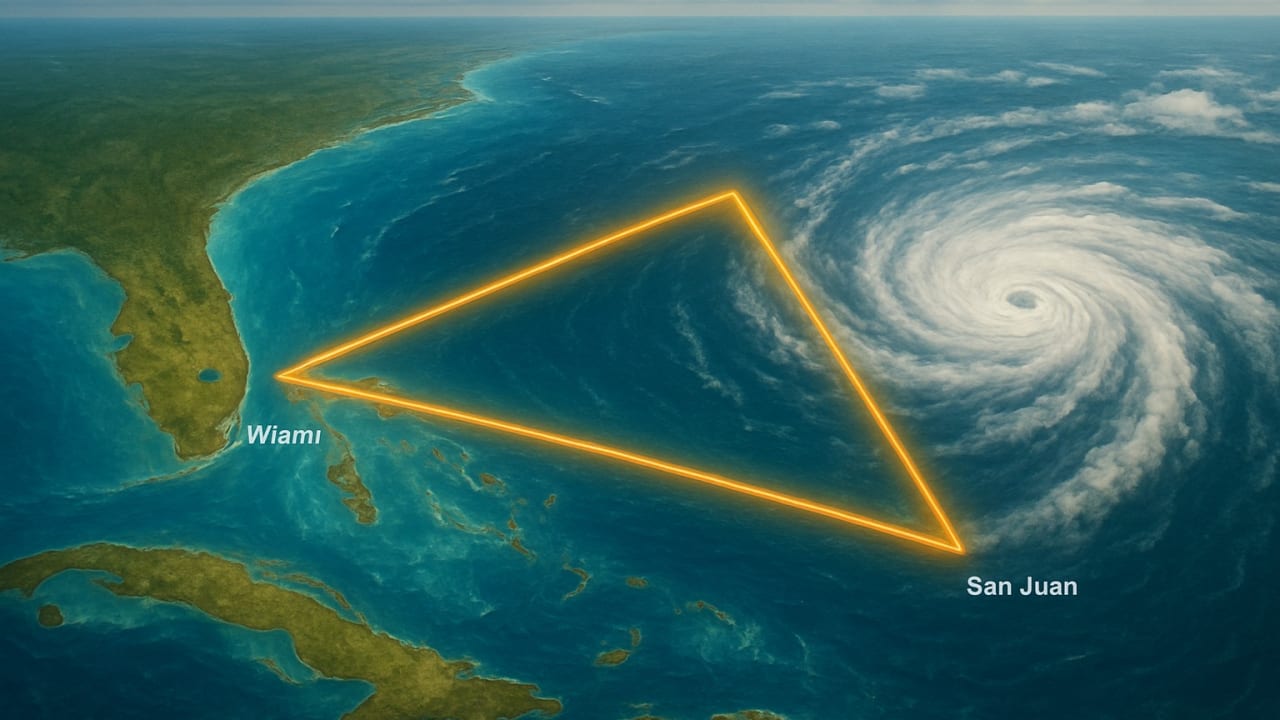
Some myths make an entrance. Then there is the Bermuda Triangle, which arrived wrapped in fog, with spinning compasses, dead radios, and planes swallowed by the sea as if the Atlantic had an appetite. For decades, that area drawn between Miami, Bermuda, and Puerto Rico was sold as a hole in the map: a place where logic shuts down and the impossible signs the weather report.
The perfect scene came on December 5, 1945. Five U.S. Navy torpedo bombers, known as Flight 19, took off from Fort Lauderdale on a training mission. It was routine. Sun, sea, fuel carefully planned, trained pilots. Then something went wrong. Lieutenant Charles Taylor, the group instructor, began to believe his compasses were failing. In the radio transmissions, he sounds confused, disoriented, convinced he no longer knew where he was. Hours later, all five aircraft vanished. To make the story even darker, a PBM Mariner flying boat sent to search for them also disappeared. Six aircraft. Fourteen men from Flight 19. Thirteen more in the rescue plane. A legend freshly fed.
Then came the USS Cyclops, a massive U.S. Navy cargo ship that vanished in March 1918 with more than 300 people on board. No distress call. No confirmed wreckage. No final explanation. If someone wanted to manufacture a myth, they could hardly ask for a better script.
And that is exactly what happened. In 1964, writer Vincent Gaddis popularized the name 'Bermuda Triangle' in a magazine article. In 1974, Charles Berlitz turned the area into a global phenomenon with his book The Bermuda Triangle. From then on, every crash, every lost vessel, every disappearance without a neat headline was tossed into the same narrative drawer. Like an office where someone starts stuffing loose papers into a folder labeled 'mysteries,' and suddenly everything looks connected.
The trick is brilliant because it plays on something deeply human: our brains hate gaps. We prefer an astonishing story to a dull list of navigation mistakes, sudden storms, poor maintenance, and bad luck. Add open ocean, radio silence, and bodies never recovered, and imagination eagerly takes over.
- A huge region with heavy traffic
- Real, tragic, highly publicized cases
- Repeated errors in books and documentaries
- And one irresistible question: if it was not a strange force, then why did this myth survive for so long?
🎁 Free access for a limited time
How would you like to continue?
Soon will require watching a short ad