Wagner-Jauregg: Curing Madness with Fever (Malariotherapy) (1927)
Arquitectos de la Vida: La Saga de los Premios Nobel · Chapter 23
Wagner-Jauregg: Curing Madness with Fever (Malariotherapy) (1927)
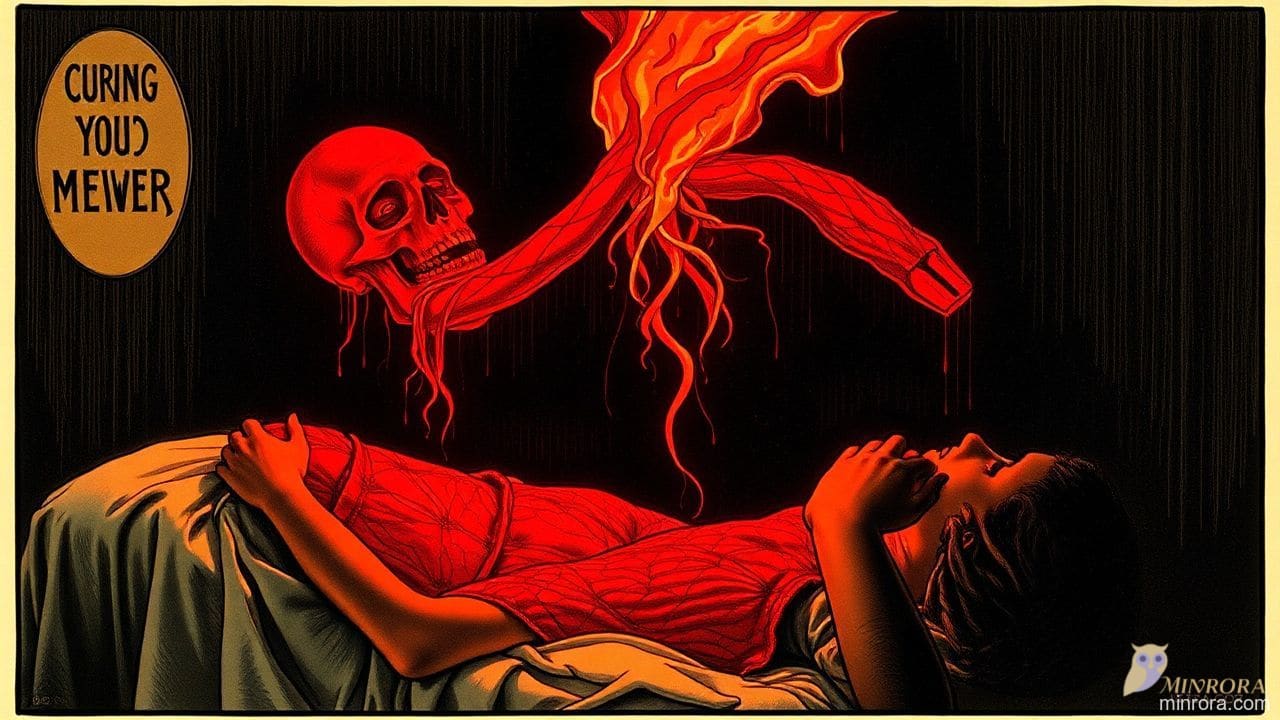
Imagine Vienna at the end of the 19th century. A city of waltzes, of Freud, and of a silent terror lurking in the shadows of bedrooms: syphilis. In those days, this disease was not just an infection; it was a slow and humiliating death sentence. After years of silence, the bacteria attacked the brain, causing what doctors called 'general paresis of the insane.' Patients lost their memory, suffered delusions of grandeur, and ended up as human shells, paralyzed and demented. There was no cure. Asylums were full of these 'living dead' waiting for the end in dark rooms.
In the midst of this setting appears our protagonist, Julius Wagner-Jauregg. He was not the typical psychiatrist who limited himself to listening and taking notes. He was a man of action, with an observation that seemed to defy all medical logic: he had noticed that some patients with mental disorders miraculously improved after surviving an infection that caused very high fevers, such as erysipelas or the flu.
To understand his logic, imagine the brain is a sophisticated computer that has been infected by a devastating computer virus that has completely frozen it. Wagner-Jauregg suspected that fever was not an enemy symptom, but a kind of 'forced system reset,' a controlled fire that burned away the errors but left the hardware intact. For thirty years, this obsessive doctor pursued a radical idea that shocked his colleagues: What if, to cure a mortal disease, we had to provoke another one?
- Syphilis affected 10% of psychiatric hospital patients at the time.
- General paresis was invariably fatal within three to five years.
- Wagner-Jauregg tried tuberculin and vaccines, but the results were not potent enough.
Finally, in 1917, Wagner-Jauregg made a decision that today would seem like something out of a mad scientist movie. Taking advantage of a wounded soldier arriving at his clinic suffering from malaria, he made a historic choice: he extracted the soldier's infected blood and injected it into the veins of his demented patients. He was about to fight one killer with another killer. How is it possible that introducing a parasite that causes chills and extreme fever could restore sanity to a man?
🎁 Free access for a limited time
How would you like to continue?
Soon will require watching a short ad